
A reliable meat grinder can transform your home cooking, whether you love making fresh burgers, sausages, or controlling ingredients for healthier meals. In this guide, we tested and compared the 7 best meat grinders for home use in 2025, focusing on grinding power, durability, ease of cleaning, and value for money. From heavy-duty electric grinders that handle large batches to compact manual options perfect for beginners, each pick delivers excellent performance for everyday kitchen needs. We also evaluated noise levels, speed, included accessories, and long-term reliability to ensure you choose the right grinder for your cooking style. Whether you’re grinding beef, chicken, pork, or even preparing homemade pet food, these top-rated meat grinders offer consistent results and great versatility. Explore our list below to find the perfect grinder for your budget and kitchen needs.
7 Best Meat Grinders for Home Use in 2025
Top 4 Picks Summary

Top 3 Product Comparison
| Feature |
|
|
|
|---|---|---|---|
| Rating | 4.8 / 5 | 4.6 / 5 | 4.5 / 5 |
| Verdict | Premium Pick for Serious Cooks | Best Budget Electric Grinder | Best for Everyday Simple Grinding |
| Pros |
|
|
|
| Check Price | Check Price | Check Price |
Individual Product Reviews
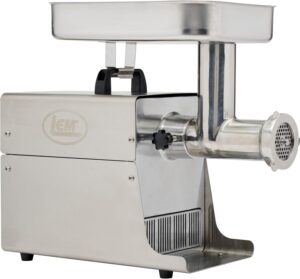
LEM Big Bite Meat Grinder
The LEM Big Bite is a premium grinder built for serious home cooks. Known for its exceptional speed and quiet operation, it is constructed from stainless steel and designed for long-term use. It handles tough meats easily and remains cool even during extended grinding sessions. The Big Bite technology helps pull meat more efficiently, reducing clogging and improving consistency.
Pros
- Very powerful
- Quiet operation
- Stainless steel build
Cons
- Higher price
- Heavy to move
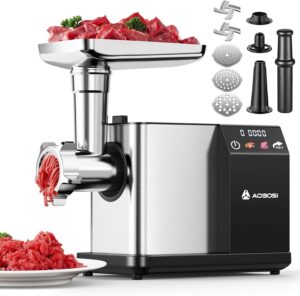
Aobosi Electric Meat Grinder
A budget-friendly grinder with strong performance, the Aobosi Electric Meat Grinder is ideal for daily home use. It offers multiple grinding plates, sausage attachments, and a reverse function to prevent clogging. Its compact size makes it perfect for small kitchens while still delivering reliable grinding results. Great for beginners or light food prep.
Pros
- Affordable
- Compact
- Reverse unclogging function
Cons
- Not for heavy-duty grinding
- Plastic parts
Cuisinart Electric Meat Grinder
The Cuisinart Electric Grinder is perfect for home cooks seeking a simple, easy-to-use grinder from a trusted brand. It grinds beef, poultry, and pork quickly, and includes two cutting plates and sausage attachments. Its stainless finish and compact size make it a great addition to any modern kitchen.
Pros
- Trusted brand
- Easy to use
- Compact design
Cons
- Limited accessories
- Not ideal for tough meats
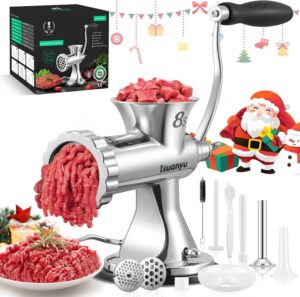
Huanyu Manual Meat Grinder
This manual grinder is a great choice for those who want full control over meat texture or prefer a non-electric option. Built with solid stainless steel, the Huanyu grinder is durable, rust-resistant, and easy to mount onto countertops. It works well for small batches of meat, vegetables, and even pasta dough.
Pros
- Durable steel
- Affordable
- No electricity needed
Cons
- Slower than electric
- Manual effort required
KitchenAid Meat Grinder Attachment
Perfect for KitchenAid stand mixer owners, this grinder attachment expands your mixer’s functionality. It easily grinds meat, cheese, and vegetables and comes with multiple plates and sausage nozzles. Its lightweight design and simple assembly make it ideal for occasional grinding.
Pros
- Easy setup
- Lightweight
- Multi-purpose
Cons
- Requires KitchenAid mixer
- Not heavy-duty
Weston Pro Series Electric Grinder
The Weston Pro Series is a commercial-grade grinder designed for home cooks who need maximum power. With its all-metal construction, precision gears, and high torque, it grinds large volumes effortlessly. Perfect for hunters, bulk meal prep, and heavy-duty grinding.
Pros
- Commercial-grade
- Very powerful
- Long-lasting build
Cons
- Expensive
- Large and heavy
Accessories Associated With a Meat Grinder
A meat grinder becomes far more versatile when paired with the right accessories. Most grinders include multiple grinding plates—fine, medium, and coarse—to help you control texture based on the recipe. Fine plates are ideal for sausages and pâté, while coarse plates work well for burgers and chili. Sausage-stuffing tubes allow you to make homemade sausages in different sizes, and kibbeh attachments help shape traditional Middle Eastern dishes. Many grinders also come with a meat pusher to safely guide ingredients into the feeding tube, reducing the risk of injury. Cleaning brushes and blade-sharpening tools are also included with higher-quality grinders, helping you maintain long-term performance. With the right accessories, a single grinder can handle multiple kitchen tasks effortlessly.
Common Accessories:
- Grinding plates (fine, medium, coarse)
- Sausage stuffing tubes
- Kibbeh attachment
- Meat pusher
- Cleaning brush
- Extra cutting blades
What to Look for in a Meat Grinder
Choosing the right meat grinder starts with understanding the key features that affect performance and durability. First, consider motor power—a 500–1200W motor is ideal for home kitchens. Build quality matters too; stainless steel parts last longer and resist rust. Look for multiple grinding plates to get more control over texture. Safety features like a reverse function help prevent clogging, especially when grinding tougher cuts of meat. You should also check the meat tray size, as a larger tray speeds up batch processing. If you plan to make sausages, ensure the grinder includes attachments. Noise level, warranty, and ease of assembly are also important factors.
Checklist When Buying:
- Motor power
- Stainless steel parts
- Reverse function
- Included plates & attachments
- Easy cleaning
- Good warranty
- Low to medium noise
How to Take Care of Your Meat Grinder
Proper maintenance ensures your meat grinder stays efficient and lasts for many years. After each use, disassemble the grinder and rinse all parts with warm water to remove fat and meat residue. Avoid using the dishwasher unless the manufacturer confirms it’s safe—dishwasher heat can dull blades or damage coatings. Dry every piece thoroughly to prevent rust, especially the blades, screws, and plates. Many users lightly coat metal components with food-safe mineral oil before storing them. Sharpening the blade occasionally keeps grinding fast and smooth. For electric grinders, wipe down the motor housing and avoid immersing it in water. Storing your grinder in a dry area and keeping extra blades organized ensures everything stays in great condition.
Care Steps:
- Disassemble immediately after use
- Wash with warm water
- Dry thoroughly
- Oil metal parts
- Sharpen blades periodically
- Store in a cool, dry place
What Is the Difference Between a Hand Grinder and an Electric Meat Grinder?
Manual and electric meat grinders have different strengths depending on your kitchen needs. Manual grinders are hand-cranked, compact, and ideal for small batches. They’re budget-friendly, portable, and don’t require electricity—perfect for off-grid or occasional use. However, they require physical effort and are slower when processing large quantities. Electric grinders use a motor to power the grinding process, making them much faster and easier to operate. They are ideal for frequent use, large batches, or tougher meats. Electric grinders come with more accessories and offer consistent results, but they cost more and take up more storage space.
| Feature | Manual Grinder | Electric Grinder |
|---|---|---|
| Speed | Slow | Fast |
| Effort | Requires hand-cranking | Motor-powered |
| Best For | Small batches | Large batches |
| Price | Low | Medium–High |
| Accessories | Limited | Many options |
| Portability | High | Low |
What Is a Stand Mixer and Why Use It?
A stand mixer is a multi-functional kitchen appliance designed to handle a wide range of food preparation tasks, from mixing dough to whipping cream. With a powerful motor and hands-free design, it provides consistent mixing results and saves time during baking and cooking. One major advantage of stand mixers is their ability to accommodate various attachments, turning the machine into a grinder, pasta maker, vegetable slicer, juicer, or cheese shredder. When used as a meat grinder (via an attachment), a stand mixer becomes a compact, efficient tool that processes small to medium batches with ease. It’s especially useful for home cooks who want one machine to perform multiple tasks without buying separate appliances.
Types of Meat Grinders
Meat grinders come in three main types, each designed for different usage levels. Manual grinders are the simplest and most affordable. They’re ideal for occasional use and small quantities of meat, requiring only hand-cranking to operate. Electric grinders are the most popular for home kitchens because they offer faster grinding, multiple accessories, and better consistency. They’re perfect for anyone who grinds meat frequently or handles larger batches. Finally, commercial grinders are heavy-duty machines used in restaurants, butcher shops, and by hunters. They are built for high-volume processing with powerful motors, stainless steel construction, and advanced cooling systems. Choosing the right type depends on your budget, kitchen space, and grinding needs.
Types:
- Manual Meat Grinders
- Electric Meat Grinders
- Commercial / Industrial Meat Grinders
The Differences Between Electric and Manual Meat Grinders
Electric and manual meat grinders differ significantly in performance, convenience, and overall user experience. Electric grinders are motor-powered, meaning they can process large quantities of meat quickly and with minimal effort. They come with multiple attachments, larger meat trays, and advanced features such as reverse functions to reduce clogging. These grinders are ideal for frequent grinding, bulk meal prep, or tougher meats. On the other hand, manual grinders rely on hand-cranking, making them more suitable for small batches or occasional use.
They are quieter, more portable, and usually more affordable. However, they require physical effort and are slower compared to electric models. Your choice largely depends on how often you plan to grind meat and the quantities you handle.
Frequently Asked Questions
What type of meat grinder is best for home use?
Electric grinders are best for most home kitchens because they are fast and can handle larger batches of beef, chicken, pork, and game meat. Manual grinders are more affordable and great for small batches, but require more effort.
How much power do I need in a meat grinder?
For home use, a grinder with 500–1000 watts is usually enough. If you grind large quantities or tougher meats like venison, look for 1200+ watt models or commercial-grade grinders.
Can meat grinders grind bones?
Most household meat grinders cannot grind bones, except for soft poultry bones. For bone grinding (e.g., raw pet food), you’ll need a heavy-duty or commercial grinder specifically rated for bone processing.
Are meat grinders easy to clean?
Yes—most modern grinders come with removable parts for easy cleaning. Stainless steel components are preferred because they resist rust and wipe clean easily. Avoid dishwashers unless the manufacturer confirms dishwasher-safe parts.
What can I grind besides meat?
Meat grinders are versatile. You can grind vegetables, nuts, cheese, fish, breadcrumbs, and even make homemade sausages with attachments. Some models also work for pasta, kibbeh, or pet food.
About the Author
